

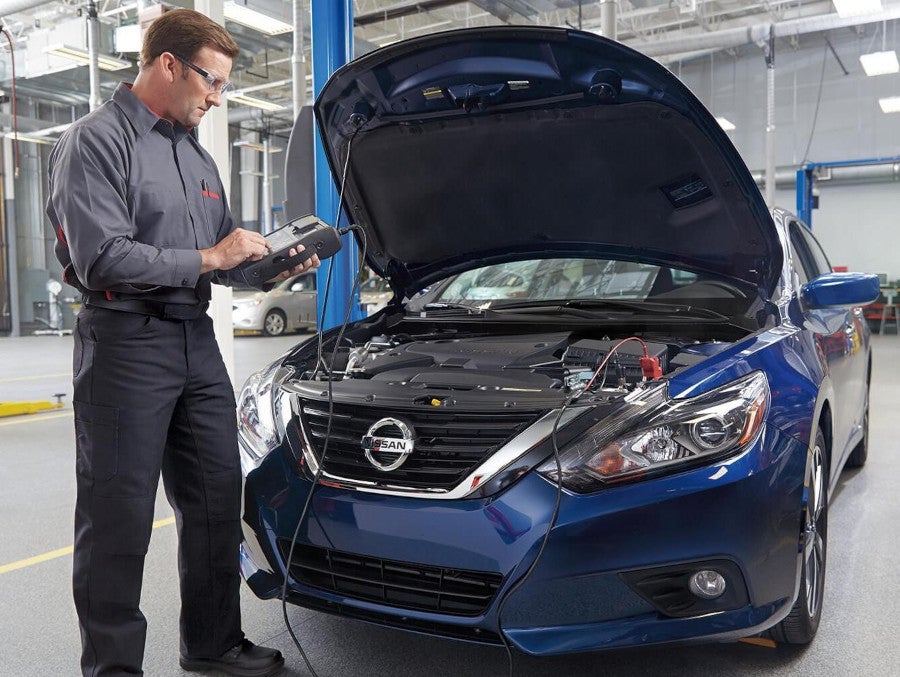
The school bell rings again soon, and for parents of newly licensed teens, that means one more thing to think about besides backpacks and schedules: whether the car can actually handle daily drives to campus. Back to school car maintenance is how you make sure the vehicle your teen drives every morning can handle the stop-and-go reality of school zones and busy commuter roads.
We put together this guide so Clermont parents can walk into the new semester with confidence instead of worry. If you'd rather have our team take a look before the first bell rings, you can schedule a service appointment whenever it's convenient.
Why Back-to-School Traffic on SR 50 and US-27 Demands Extra Caution
Close to 60,000 cars travel State Road 50 daily between US-27 and Florida's Turnpike, and that number climbs once school buses, parent drop-off lines, and pedestrian crossings return to the mix. Backups are common on SR 50 as commuters move between Lake and Orange counties, and the same stretch that felt manageable over summer break can turn into a slow crawl by 7:45 a.m. in August.
For a teen driver, this kind of congestion means constant braking, sudden stops, and split-second decisions near crosswalks. NHTSA urges drivers to watch for children, follow school-zone speed limits, and yield in crosswalks, and to never pass a stopped school bus with lights flashing. These are basic rules, but they matter most in August, when Clermont's roads get crowded, pedestrians get distracted, and teens are still building experience behind the wheel.
Tires: Check Tread and Pressure Before the Morning Rush
Tires are the only part of the car actually touching the road, so their condition affects braking distance, handling, and even fuel costs. A quick way to check tread depth is the penny test: place a penny with Lincoln's head upside down and facing you, and if you can see the top of his head, it's time for new tires. New tires typically start with 10/32" or 11/32" of tread, and the U.S. DOT recommends replacement once tread wears down to 2/32".
Tire pressure matters just as much as tread. Always check against the number listed on the driver's-door placard, not the figure printed on the tire's sidewall, since those numbers serve different purposes. If the TPMS light comes on, at least one tire is significantly underinflated and needs attention soon, not eventually. While checking pressure, look over the sidewalls for cuts, cracks, or bulges, and remember that a spare tire is meant for short-term use, never as a permanent replacement.
There's a financial upside here too: properly inflated tires can save up to 11 cents per gallon, which adds up over a semester of daily driving. Florida's intense sun is worth factoring in as well, since heat can accelerate rubber deterioration faster than in cooler climates, making regular tire checks even more important for local drivers.
Brakes: Testing Responsiveness for Stop-and-Go School Zones
School zones mean constant braking, so this is one system you want fully dialed in before the semester starts. With the car parked, have your teen press the brake pedal and pay attention to how it feels. A soft or spongy pedal can mean air in the brake lines or a fluid leak, while a firm pedal generally means the system is working as it should.
Sound is another clue. A squealing noise usually points to a wear indicator on a thin brake pad, while grinding means metal is contacting the rotor directly and needs immediate attention. If the steering wheel or brake pedal shakes during braking, that often signals warped rotors. As a general rule, most mechanics recommend replacement once pad material wears down to about 1/8 inch (3mm), which is roughly 75% worn. We recommend testing brakes at home every six months, alongside a professional inspection once a year or every 12,000 miles, whichever comes first.
Battery Health: Avoiding Dead Starts on Drop-Off Mornings
Few things derail a school morning faster than a car that won't start. Heat is the leading cause of battery failure according to AAA, and that's a real concern here in Central Florida. Consumer Reports has found that batteries in hot southern states last about 17 months less on average than those in cooler regions, a gap AAA highlights as a key reason Florida drivers should keep a closer eye on battery health.
A few simple habits help extend battery life. Clean off corrosion at the terminals, keep the clamps tight, and make sure the battery is properly secured so vibration doesn't loosen anything over time. Once a battery passes the two-year mark, Consumer Reports suggests an annual load test, especially in warm climates like ours, since a battery can look fine externally while still being close to failure internally.
Wiper Blades and Visibility for Rainy Central Florida Mornings
Central Florida's rainy season has a habit of showing up right around the start of school, turning morning commutes into low-visibility situations fast. Wiper blades take a beating from sun exposure year-round, so we recommend replacing them every 6 to 9 months in a wet climate like Florida's.
Watch for streaking across the windshield, squeaking or wobbling during use, or rubber that's cracked, torn, or hardened, all signs it's time for new blades. Always replace them in pairs, even if only one side seems worn, since mismatched blades tend to wear unevenly.
Visibility isn't only about wipers. Checking that headlights and taillights work, along with topping off windshield washer fluid, rounds out a quick visibility check that matters most in school zones where kids may be walking or biking in the rain.
A Simple At-Home Safety Checklist for Clermont Parents
Some of these checks you can knock out in your driveway; others really call for a technician. Here's how we'd split them.
What You Can Check in 10 Minutes
Tire pressure against the driver's-door placard, plus a quick penny test on tread depth.
Wiper blade condition, looking for streaking, cracking, or wobbling.
Headlights, taillights, and turn signals, confirmed working.
Windshield washer fluid level, topped off if low.
Battery terminals, checked for corrosion and a secure connection.
Brake pedal feel while parked, noting whether it's firm or spongy.
A helpful habit worth adopting: set a reminder at the start of each semester to run through this list with your teen. It takes ten minutes, and it turns car care into something you're teaching together rather than something you're doing for them.
Signs It's Time for a Professional Look
Grinding or persistent squealing when braking.
A shaking steering wheel or pedal during stops.
A lit TPMS or check-engine light on the dashboard.
A battery over two years old that hasn't been load tested.
Any fluid leaks visible under the car.
Tires with visible sidewall damage or uneven wear patterns.
If any of these show up, it's worth having a certified technician take a closer look before your teen is back on SR 50 or US-27 every day.
Building Safe Driving Habits for the School Year Ahead
A well-maintained car is only part of the equation. NHTSA reports that in 2024, 85,947 teen drivers were injured in crashes, and traffic crashes remain a leading cause of death for teens aged 15 to 18. AAA, drawing on NHTSA data, found that more than one in four fatal crashes involving teen drivers happens between 3 and 7 p.m., the exact window many students are heading home from school or activities. Distraction plays a role too: dialing a phone multiplies crash risk sixfold, while texting multiplies it by 23 times. NHTSA also found that 51% of teen drivers who died in 2024 weren't buckled in.
These numbers are why a few simple habits matter so much. Buckle up every time, keep phones out of reach, and stay focused on the road, especially during that after-school stretch. Teen Driver Safety Week falls on October 18-24, 2026, which makes for a natural checkpoint to revisit these conversations with your teen once the semester is underway.
Bring Your Teen's Car to Reed Nissan Clermont for a Quick Inspection
What Our Service Center Offers
If anything on the "professional look" list applies to your teen's car, or if you'd simply rather have a certified team confirm everything is in order, we're here at 16005 State Road 50, Clermont, FL 34711. Our service center is staffed by numerous ASE Certified technicians, two Certified Master Technicians, and an NNA Certified service team, and we work on all makes, not just Nissan vehicles.
Every Nissan Express Service visit includes a complimentary multi-point inspection covering brake-pad thickness and tire tread depth, delivered in an easy-to-read report so you know exactly where things stand. Nissan Express Service requires no appointment, which fits well with the unpredictable schedules that come with school mornings and after-school pickups. For families in Clermont, Minneola, and Groveland, that kind of flexibility means one less thing to coordinate during an already busy season.
Ready to Get Started
A ten-minute check at home, paired with a quick visit to a trusted local team when something needs a closer look, goes a long way toward keeping your teen driver safe on Clermont's roads this year. When you're ready, schedule a service appointment with us, and we'll help make sure the car is ready before the first day of class.